FDA Approves Mavenclad

FDA Approves Mavenclad (cladribine) Tablets for Multiple Sclerosis

March 29, 2019 -- The U.S. Food and Drug Administration today approved Mavenclad (cladribine) tablets to treat relapsing forms of multiple sclerosis (MS) in adults, to include relapsing-remitting disease and active secondary progressive disease. Mavenclad is not recommended for MS patients with clinically isolated syndrome. Because of its safety profile, the use of Mavenclad is generally recommended for patients who have had an inadequate response to, or are unable to tolerate, an alternate drug indicated for the treatment of MS.
We are committed to supporting the development of safe and effective treatments for patients with multiple sclerosis,” said Billy Dunn, M.D., director of the Division of Neurology Products in the FDA’s Center for Drug Evaluation and Research. “The approval of Mavenclad represents an additional option for patients who have tried another treatment without success.”
MS is a chronic, inflammatory, autoimmune disease of the central nervous system that disrupts communications between the brain and other parts of the body. Most people experience their first symptoms of MS between the ages of 20 and 40. MS is among the most common causes of neurological disability in young adults and occurs more frequently in women than in men.
For most people, MS starts with a relapsing-remitting course, in which episodes of worsening function (relapses) are followed by recovery periods (remissions). These remissions may not be complete and may leave patients with some degree of residual disability. Many, but not all, patients with MS experience some degree of persistent disability that gradually worsens over time. In some patients, disability may progress independent of relapses, a process termed secondary progressive multiple sclerosis (SPMS). In the first few years of this process, many patients continue to experience relapses, a phase of the disease described as active SPMS. Active SPMS is one of the relapsing forms of MS, and drugs approved for the treatment of relapsing forms of MS can be used to treat active SPMS.

The efficacy of Mavenclad was shown in a clinical trial in 1,326 patients with relapsing forms of MS who had least one relapse in the previous 12 months. Mavenclad significantly decreased the number of relapses experienced by these patients compared to placebo. Mavenclad also reduced the progression of disability compared to placebo.

Mavenclad must be dispensed with a patient Medication Guide that describes important information about the drug’s uses and risks. Mavenclad has a Boxed Warning for an increased risk of malignancy and fetal harm. Mavenclad is not to be used in patients with current malignancy. In patients with prior malignancy or with increased risk of malignancy, health care professionals should evaluate the benefits and risks of the use of Mavenclad on an individual patient basis. Health care professionals should follow standard cancer screening guidelines in patients treated with Mavenclad. The drug should not be used in pregnant women and in women and men of reproductive potential who do not plan to use effective contraception during treatment and for six months after the course of therapy because of the potential for fetal harm. Mavenclad should be stopped if the patient becomes pregnant.
Other warnings include the risk of decreased lymphocyte (white blood cell) counts; lymphocyte counts should be monitored before, during and after treatment. Mavenclad may increase the risk of infections; health care professionals should screen patients for infections and treatment with Mavenclad should be delayed if necessary. Mavenclad may cause hematologic toxicity and bone marrow suppression so health care professionals should measure a patient’s complete blood counts before, during and after therapy. The drug has been associated with graft-versus-host-disease following blood transfusions with non-irradiated blood. Mavenclad may cause liver injury and treatment should be interrupted or discontinued, as appropriate, if clinically significant liver injury is suspected.
The most common adverse reactions reported by patients receiving Mavenclad in the clinical trials include upper respiratory tract infections, headache and decreased lymphocyte counts. 
The FDA granted approval of Mavenclad to EMD Serono, Inc.
Source: FDA
Posted: March 2019
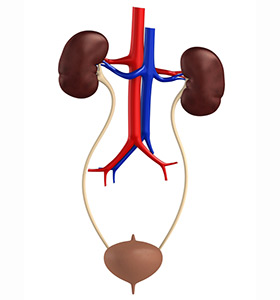
How to Manage Your Overactive Bladder

Do you feel like you always need to go? Unable to get out the house for fear of always needing the restroom?
You are one of many. More than 33 million Americans suffer from overactive bladder. Overactive bladder (OAB) is a common condition that can affect up to roughly 40% of women in their lifetime. OAB can lead to urinary incontinence - the loss of bladder control, obviously an embarrassing problem.
Those with OAB, also called urge incontinence, experience a sudden, strong urge to urinate during the day and night; they may also leak urine before getting to the restroom.
OAB results in someone needing to urinate more than the usual 7 to 8 times per 24 hours. Therefore, OAB usually consist of four symptoms:
  • an urgent need to urinate
  • a need to urinate more frequently than normal
  • waking from sleep to urinate
  • urgency incontinence (urine leakage).
OAB is not due to effects from a urinary tract infection or from a neurologic condition such as multiple sclerosis, and your doctor should rule this out.

Is Overactive Bladder (OAB) the Same as Stress Incontinence?

No. Stress incontinence occurs when pelvic muscles, located beneath the bladder, are not strong enough. These muscles cannot handle any pressure being exerted on the bladder, and this leads to urine leaking.
Stress incontinence may occur when someone is sneezing, lifting heavy items, laughing, or coughing.
Pregnancy and after childbirth is also a time when stress incontinence may be bothersome, and it may continue to be a problem long after childbirth.
Urge incontinence is another name for overactive bladder (OAB). Stress incontinence and OAB can also occur together, known as mixed incontinence.
Other types of incontinence include overflow incontinence and functional incontinenc.

How Will I Know if a Urinary Tract Infection is Causing My Symptoms?

Leaking of urine, whether a small or large amount of urine, is the main symptom of incontinence due to overactive bladder (OAB).
OAB can also lead to leakage during sleep. Urine leakage due to a urinary tract infection(UTI) is usually a short-term problem, but visit your doctor as you may need an antibiotic.
If urine leakage is accompanied by the following symptoms, you may have a UTI:
  • Pain or a burning sensation during urination.
  • Fever
  • Pink or red urine discoloration
  • A strong urine odor or cloudy urine
  • Stomach or back pain
  • Frequent urination

How is an Overactive Bladder Diagnosed?

If you are experiencing overactive bladder (OAB) symptoms, and especially if they interfere with your normal routines like sleep, work or leisure time, see your doctor.
Leaking urine at any age is not normal. Do not feel ashamed or embarrassed to mention these symptoms to your doctor; OAB is a common condition for which many women seek treatment. You will not be the first.
What happens during my doctor visit for overactive bladder?
  • Your medical history will be reviewed
  • You may be asked to keep a voiding dairy for a few days
  • A neurologic and pelvic exam will be done
  • Your doctor may check your urine for signs of a urinary tract infection (UTI).
  • Depending upon your results, imaging tests like a CT or MRI may be needed to determine if your OAB is due to a nerve injury.

What Everyone Must Know About The Placebo Effect

​The placebo effect ​can kill us or heal the impossible. Learn ​the power of our thoughts and why we can use ​them to cure incurable diseases. 

Discover ​how one man healed a broken neck and how others killed themselves by thought alone. And find out why Big Pharma wants to hide the truth from us.

Did you know that our thoughts and beliefs can affect our health? If we change our thoughts and perception, we may heal our illnesses.

​What Is The Placebo Effect?

Our thoughts are much more powerful than we believe they are. They can affect the health of the whole body. Many people are aware of the term placebo effect. A placebo is anything that seems to be a "real" medical treatment but isn't.
It could be a pill, a shot, or some other type of "fake" treatment. Researchers use placebos to help them understand what effect a new drug has 


What Everyone Must Know About The Placebo Effect

​The placebo effect ​can kill us or heal the impossible. Learn ​the power of our thoughts and why we can use ​them to cure incurable diseases.

Discover ​how one man healed a broken neck and how others killed themselves by thought alone. And find out why Big Pharma wants to hide the truth from us.
Legal Notice
The information is presented for educational purposes only and is not intended to diagnose, prescribe treat or cure cancer.This information is not intended as medical advice, please refer to a qualified healthcare professional.
Video Transcription
Did you know that our thoughts and beliefs can affect our health? If we change our thoughts and perception, we may heal our illnesses.
In this video, I’m going to talk about the placebo effect and the power of our thoughts. Then I’m going to tell you some amazing placebo stories
.After that, I’m going to explain how the placebo effect works.And finally, I’m going to expose Big Pharma's agenda to hide the truth from us.
So let’s begin.

​What Is The Placebo Effect?

Our thoughts are much more powerful than we believe they are. They can affect the health of the whole body. Many people are aware of the term placebo effect. A placebo is anything that seems to be a "real" medical treatment but isn't.
It could be a pill, a shot, or some other type of "fake" treatment. Researchers use placebos to help them understand what effect a new drug has.
pills flying around
Placebo is Latin for “I shall please.”
For instance, some people in a study might get a new drug to lower cholesterol. Others receive a placebo. None of the people in the study will know if they got the real treatment or not.
Researchers then compare the effects of the drug and the placebo on the people in the study. That way, they can determine the effectiveness of the new drug and check for side effects.
Sometimes a person can have a response to a placebo. It can be either positive or negative. For instance, the person's symptoms may improve. Or the person may experience side effects from the treatment.
Placebo is Latin for “I shall please.”

Optimists Live Longer Than Pessimists

A wealth of research shows that our attitude does affect our health, including how long we live. For example, the Mayo Clinic published a study in 2002 that followed 447 people for more than 30 years.
Optimists were healthier on the physical and mental plane compared to pessimists. They focus their attention on the best future scenario. Optimists had fewer problems because of their physical and emotional state.

Study: Rate of Opioid-Related Deaths Increasing in Patients With HIV

Concomitant HIV infection and opioid use is common throughout the United States.1-4 Patients with HIV are more likely to have chronic pain, be prescribed opioid therapy, and receive higher doses of opioids.1While not every patient who is prescribed opioids becomes addicted, these characteristics increase the likelihood of opioid use disorder (OUD) and the potential for opioid-related death among this patient population.

OUD has a negative impact on HIV care, adherence and outcomes, and is cited as a potential risk for increased transmission.2It also appears that OUD may be a notable risk factor for mortality in HIV patients.

A study presented at the 2019 Conference on Retroviruses and Opportunistic Infections (CROI) revealed data that, while the overall number of deaths in patients with HIV in the United States is declining, the number of number of opioid overdose deaths in HIV patients is on the rise.3Using data from the National HIV Surveillance System, the retrospective study showed a 12.7% decline [1630.6 vs. 1,868.8 per 100,000] in overall deaths in HIV patients from 2011 to 2015. In that same period, the amount of opioid-related deaths in patients with HIV rose by 47% [33.1 vs. 23.2 per 100,000].

The highest rate of deaths occurred in injection drug users [137.4/100,000], Caucasians [49.1/100,000], patients aged 50-59 years [41.9/100,000] and women [35.2/100,000]. However, the increase of opioid deaths was consistent across all ages, genders, ethnicities, and transmission categories. Several demographics saw increases in opioid-related deaths in excess of 50%. These include injectable drug users (80%), heterosexual transmission (74%), and African Americans (74%). Though patients in the fifth decade had the highest consistent overall rates of opioid deaths, the sharpest increases in mortality were seen in patients over the age of 60 years (202%), those 20-29 years (113%), and those 40-49 years (51%).

The West US Census region was the only geographic location in the US where an increase in opioid-related deaths was not seen (2% decline). In contrast, large increases were seen in the South (65%), the Northeast (59%), the Midwest (32%).The authors concluded that prevention efforts could specifically focus or target those groups with the highest overall rates or greatest increases in opioid-related deaths.

While this study suggests where prevention efforts can be focused, by whom prevention should be provided remains unclear. It is not uncommon for HIV patients to be prescribed opioids by the same clinician treating their HIV.2,4-5Several recent studies have highlighted the integration of HIV and OUD care.2,4-5While integration does increase antiviral receipt and patient satisfaction, it has not yet shown to improve HIV outcomes.5Furthermore, the recommended and necessary vigilance for opioid prescribing may not always occur in this setting.

In a study published in AIDS and Behavior, HIV physicians acknowledged feeling undertrained in chronic pain management and opioid prescribing.2 They also expressed hesitation for creating situations that might hamper the provider-patient relationship essential to optimal HIV-related outcomes or introducing the stress that opioid deprescribing could cause the patient. Subsequently, the task of monitoring patients on opioids often falls to other health care providers. Still, the recognition and treatment of OUD is vital for any patient population; HIV patients in particular may experience benefits beyond sobriety.

The treatment of OUD has been shown to reduce HIV transmission, increase antiviral adherence, improve viral suppression, and decrease mortality.6 One meta-analysis revealed that providing medications for OUD reduced HIV transmissions by 54%.6

Selecting an agent can be cumbersome. Of the available options, buprenorphine appears to be the best suited for HIV patients in terms of minimal pertinent drug-interactions and easier administration burden. In addition to traditional oral routes, it come as a monthly injection or 6-month implant which can be administered in the clinic.6Methadone metabolism is highly dependent on cytochrome P450 (CYP) enzymes which are known to be induced by several antivirals. Subsequently, HIV patients may require higher methadone doses for effective treatment.6 Logistic and dosing barriers can be proactively addressed if appropriately identified. Inclusion of and input from a pharmacist could positively affect these treatment decisions.

The opioid epidemic has raged in almost every demographic and segment of society in the US. This new data indicating that opioid overdoses in HIV patients are threatening to circumvent the enormous strides in HIV treatment and mortality over several decades must be addressed.

Identification and treatment of HIV patients with OUD can help mitigate the rising mortality rates while subsequently improving overall HIV care and outcomes. However, successful treatment for many HIV patients will require a collaborative, interprofessional approach.


References
  1. Cunningham CO. Opioids and HIV infection: from pain management to addiction treatment. Top Antivir Med. 2018;25:143-146
  2. Carrol JJ, Colasanti J, Lira MC et al. HIV Physicians and chronic opioid therapy: it’s time to raise the bar. AIDS Behav. 2018. Doi: doi: 10.1007/s10461-018-2356-2. [Epub ahead of print]
  3. Bosh KA, Crepaz N, Dong X et al. Opioid overdose deaths among persons with HIV Infection, United States, 2011-2015. [Abstract number 147]. Abstract presented at the 2019 Conference on Retroviruses and Opportunistic Infections; March 7, 2019; Seattle, Washington
  4. Oldfield BJ, Munoz, N, Boshnack N, et al. “No more falling through the cracks”: A qualitative study to inform measurement of integration of care of HIV and opioid use disorder. J Subst Abuse Treat. 2019;97:28-40
  5. Oldfield BJ, Munoz N, Mcgovern MP, et al. Integration of care for HIV and opioid use disorder: a systematic review of interventions in clinical and community-based settings. AIDS. 2018.doi: 10.1097/QAD.0000000000002125. [Epub ahead of print]
  6. Fanucchi L, Springer SA, Korthuis PT. Medications for the treatment of opioid use disorder among persons living with HIV. Curr HIV/AIDS/ Rep. 2019. doi: 10.1007/s11904-019-00436-7. [Epub ahead of print]
     

Alexander Fleming and the Discovery of Penicillin

The discovery of penicillin, which has saved millions of lives, was made by physician/scientist Alexander Fleming.
Born in Scotland in 1881, he eventually moved to London with his family. After completing school, Fleming worked in a shipping office for several years before starting medical school, using money from his share of his uncle’s estate to pay for his education. In 1906, Fleming graduated from St. Mary’s Medical School at London University.
While serving in the army, he became a marksman. The captain convinced Fleming to pursue a career in research instead of surgery, so that he could stay at the school. Fleming was taken under the wing of Sir Almroth Wright, a pioneer in immunology and vaccine research. Fleming remained with this research group for his entire career.
As an Army Medical Corps captain in World War I, he witnessed many of his fellow soldiers die as a result of uncontrolled infection. At the time, antiseptics were used and often caused more harm than good. Fleming wrote an article discussing the anaerobic bacteria present in deep wounds, which were not destroyed by the antiseptics. His research was not accepted initially, but he continued on.

In 1922, Fleming discovered lysozyme, an enzyme with weak antibacterial properties that inhibited bacterial growth. He also found lysozyme in fingernails, hair, saliva, skin, and tears. In his research, Fleming found that lysozyme was effective against only a small number of non-harmful bacteria.
In 1928, he started to research common staphylococcal bacteria. An uncovered Petri dish near an open window became contaminated with mold. Fleming realized that the bacteria near the mold were dying. He isolated the mold and identified it as Penicillium genus, which he found to be effective against all Gram-positive pathogens. Gram-positive pathogens cause diseases, such as diphtheria, gonorrhea, meningitis, pneumonia, and scarlet fever. Fleming discovered that it was not the mold itself but a “juice” it had produced that had destroyed the bacteria. He named this “mold juice” penicillin.
Later, Fleming said: “When I woke up just after dawn on September 28, 1928, I certainly didn’t plan to revolutionize all medicine by discovering the world’s first antibiotic, or bacteria killer. But I suppose that was exactly what I did.”
Initially, the medical community was not so enthusiastic about Fleming’s penicillin discovery. He also had difficulty isolating large quantities of “mold juice.” In 1940, just as Fleming was about to retire, 2 fellow scientists, Ernst Chain and Howard Florey, became interested in penicillin. Soon, they were able to mass produce penicillin for use during World War II.
Fleming received many awards, including 30 honorary degrees, and most notably, the Nobel Prize in Physiology/Medicine in 1945. He was also named one of the most important people of the 20th century by Time Magazine.
In terms of his personal life, Fleming was known as modest, patient, quiet, shy, and unemotional. He avoided attention and was even sometimes painfully silent around close friends and even his wife, Sarah Marion McElroy, a nurse. Fleming and his wife had a son, Robert, who became a general practitioner. When she passed away after 34 years of marriage, Fleming had a very difficult time. He lost himself in his work, spending most of his time behind closed doors in the lab. In 1953, Fleming married Dr. Amalia Koutsouri-Vourekas in a Greek church in London.
He died at home, of coronary thrombosis, in 1955, after suffering from stomach upset for weeks.

It was said that Fleming “died as he wished: quietly, without a gradual decline in physical or mental capacity, and even without inconveniencing his physician.”
Reference
Tan SY, Tatsumara Y. Alexander Fleming (1881–1955): discoverer of penicillin. Singapore Med J. 2015;56(7): 366–367. doi: 10.11622/smedj.2015105.

NAPLEX PRACTICE QUESTION NO.5


Important Pharmacology Mnemonics

Extremely important pharmacology Mnemonics

Top 100 Pharmacology Mnemonics

Pharmacology Mnemonics are various techniques that facilitate Students recall larger pieces of Clinical information, particularly in the form of lists like characteristics, stages, steps, parts, phases, etc.

There are many types of mnemonics which works better like Name Mnemonics, Model Mnemonics, Expression or word mnemonics, Image mnemonics etc.

Pharmacology Mnemonics helping students performs better in exams.In This Article We will Highlight Top 100 of the Most important Pharmacology Mnemonics .

Pharmacology Mnemonics 1-33
1. Sulfonamides: common characteristics SULFA:
S-Steven-Johnson syndrome
U-Urine precipitation/ Useful for UTI
L-Large spectrum
F-Folic acids synthesis blocker
A-Analog of PABA

2. Diuretics: groups “Leak Over The CAN“:
L-Loop diuretics
O-Osmotics
T-Thiazides
C-Carbonic anhydrase inhibitors
A-Aldosterone inhibitors
N-Na (sodium) channel blockers


3. Tuberculosis: treatment If you forget your TB drugs, you’ll
die and might need a PRIEST“:
P-Pyrazinamide
R-Rifampin
I-Isoniazid (INH)
E-Ethambutol
St-Streptomycin

4. Aminoglycosides: common characteristics AMINO:
A- Active Against Aerobic gram negative
M-echanism of resistance are Modifying enzymes
I– Inhibit protein synthesis by binding to 30S subunit
N- Nephrotoxic
O- Ototoxic

5. Femara (Letrozole)  Side Effects

Just Remember “FEMARA”
 F–Fracture (Bone), Flushes (Hot)
 E–Edema (Peripheral)
 M–Memory impairment
 A–Anxiety (Less Common)
 R–Raised Sweating
 A–Arterial thrombosis(very rare)

6. Thalidomide: effect on cancer                      cells “Thalidomide
Makes the blood vessels hide“:
Use thalidomide to stop cancer cells              from growing new blood vessels.

 7. Carbamazepine (CBZ): use CBZ:
        C-Cranial Nerve V (trigeminal) neuralgia
        B-Bipolar disorder
        Z-Zeisures

8. Warfarin: interactions
             ACADEMIC QACS:
         A-Amiodarone
         C-Cimetidine

Treatment options for COVID19

Treatment Options for COVID-19 🦠 - Remdesivir - Lopinavir/Ritonavir - Ribavirin - Tocilizumab - Anakinra - Chloroquine & Hydrox...